



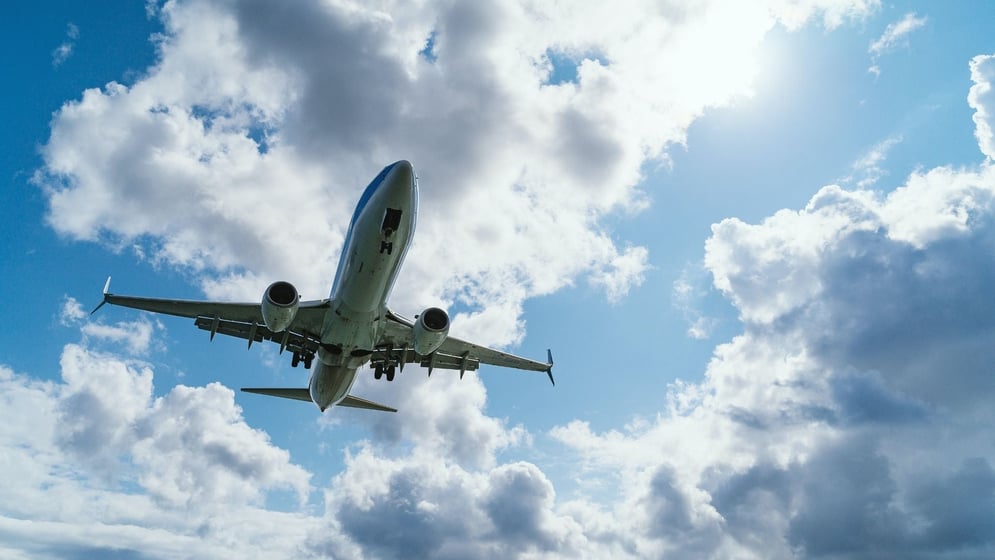
For almost two decades, every list of the world's largest airplanes started with the same aircraft: the Antonov An-225 Mriya. That changed in February 2022, when the only completed An-225 was destroyed at Hostomel airfield near Kyiv. The two great airliner programmes have closed too. Airbus delivered its last A380 in December 2021, and Boeing handed over its final 747 in January 2023. So which giants are still flying in 2026?
"Largest" can mean wingspan, weight, length, payload or cargo volume, and each measure produces a different winner. In this 2026 edition we say which measure each aircraft leads on, use manufacturer figures wherever the manufacturer publishes them, and separate the aircraft that are flying today from the one that is gone and the one still to come.
The giants at a glance
| Aircraft | Largest by | Key figures | Status in 2026 |
|---|---|---|---|
| Stratolaunch Roc | Wingspan; heaviest take-off weight flying | 117 m span; MTOW 1.3 million lb (≈ 590 t) | Flying, carrier for hypersonic test vehicles |
| Airbus A380-800 | Passenger capacity; heaviest airliner | 79.8 m span; 72.7 m long; MTOW 575 t; up to 853 seats | In service; production ended 2021 (251 built) |
| Boeing 747-8 | Length among airliners in service | 76.3 m long; 68.4 m span | In service; production ended 2023 |
| Antonov An-124-100 | Payload among production cargo aircraft | 73.3 m span; 69.1 m long; 120 t payload (150 t on upgraded aircraft) | Flying with Antonov Airlines from Leipzig |
| Boeing 747 Dreamlifter | Cargo volume | ≈ 1,840 m³ (65,000 cu ft) hold | 4 aircraft carrying 787 parts |
| Airbus BelugaXL | Outsize cargo for aircraft parts | 63.1 m long; 51 t payload | 6 aircraft in Airbus service |
MTOW = maximum take-off weight. Figures are for the version named; individual aircraft and operators can differ.
The world's largest aircraft still flying
1. Stratolaunch Roc: the widest wings ever flown
Wingspan 117 m (385 ft); maximum take-off weight 1.3 million lb (≈ 590 t).
Roc is two fuselages joined by one enormous wing and powered by six engines originally developed for the Boeing 747. It first flew in April 2019. It was designed to launch rockets in mid-air, but today it carries Stratolaunch's Talon-A hypersonic test vehicles. On flights in December 2024 and March 2025, a Talon-A released from Roc passed Mach 5 and returned to a runway landing. No aircraft has ever flown with a wider wingspan, and none flying today has a higher maximum take-off weight.
2. Airbus A380: the largest airliner ever built
Wingspan 79.8 m; length 72.7 m; height 24.1 m; MTOW 575 t; certified for up to 853 passengers.
The double-deck A380 entered service with Singapore Airlines in October 2007. Production ended in December 2021 with the 251st aircraft, delivered to Emirates, which took 123 of them and is still by far the largest operator. Its cabin covers about 550 m², and in a typical four-class layout it seats 545 people. Several airlines retired the type during the pandemic, but the A380 remains the largest and heaviest passenger aircraft flying.
3. Boeing 747-8: the longest airliner in service
Length 76.3 m; wingspan 68.4 m.
The 747-8 is the last and largest version of the original jumbo jet, built both as a passenger aircraft (747-8 Intercontinental) and as a freighter (747-8F). It is about 3.6 metres longer than the A380, though lighter and with fewer seats. On 31 January 2023 Boeing delivered the last 747, a 747-8F for Atlas Air, ending a production run of 1,574 aircraft. The 747-8F remains one of the main long-haul freighters on world cargo routes.
4. Antonov An-124 Ruslan: the heavy-lift workhorse
Wingspan 73.3 m; length 69.1 m; payload up to 120 t, or 150 t on upgraded versions.
With the An-225 gone, the An-124 is the largest cargo aircraft ever built in series. Its nose lifts and its rear ramp opens, so loads such as turbines, locomotives and aircraft engines can drive straight through. After the 2022 attack on its home base, Antonov Airlines moved its operations to Leipzig/Halle in Germany. In July 2025 another An-124, modernised in Ukraine, flew from Kyiv to rejoin that fleet.
5. Boeing 747 Dreamlifter: the biggest cargo hold
Hold volume about 1,840 m³ (65,000 cu ft); four aircraft.
Boeing converted four used 747-400s with a swollen upper fuselage and a tail that swings open, so it could carry 787 Dreamliner wings and fuselage sections from suppliers in Japan, Italy and the US. Today the Dreamlifters fly those parts to the 787 final assembly site in North Charleston, South Carolina. They carry outsize components, not heavy ones, so their payload is far below an An-124's.
6. Airbus BelugaXL: Airbus's flying factory link
Length 63.1 m; payload 51 t; six aircraft.
Based on the A330, the BelugaXL can carry two 30-metre A350 wings at once or the largest A350 fuselage section between Airbus plants in Europe. The first entered service in January 2020 and the sixth in June 2024. Airbus says the BelugaXL will become its main transporter from 2027 as the older BelugaST fleet steps back from that role.
The one that is gone: Antonov An-225 Mriya
The six-engine An-225 was the heaviest aircraft ever flown, with a maximum take-off weight of 640 tonnes and an 88-metre wingspan. Only one was completed. It was destroyed in its hangar at Hostomel during fighting in the first days of the Russian invasion, and Ukrainian officials confirmed the loss on 27 February 2022. Antonov has said it intends to build a new Mriya and put the cost at no less than €500 million, but no funding or timeline has been confirmed.
The one still to come: Boeing 777-9
Boeing's 777-9, with folding wingtips that let its long wing fit standard airport gates, is still in certification. In July 2026 Boeing said the test fleet had logged more than 4,800 flight hours, half of the planned certification testing was complete, and first delivery is planned for 2027. Once in service it will challenge the 747-8 for the title of longest airliner flying.
Why these giants matter for logistics
- Big airliners have given way to big twins. The A380 and 747 are no longer built, and airlines now favour large twin-engine aircraft with lower operating costs.
- Heavy lift is scarce. With the An-225 gone, the An-124 fleet is the main option for single loads above 100 tonnes, and there are few of them.
- Aircraft builders run their own airlines. The Dreamlifter and BelugaXL exist because aircraft production is a global supply chain in which large parts have to move between plants on a tight schedule.
What this means on the floor
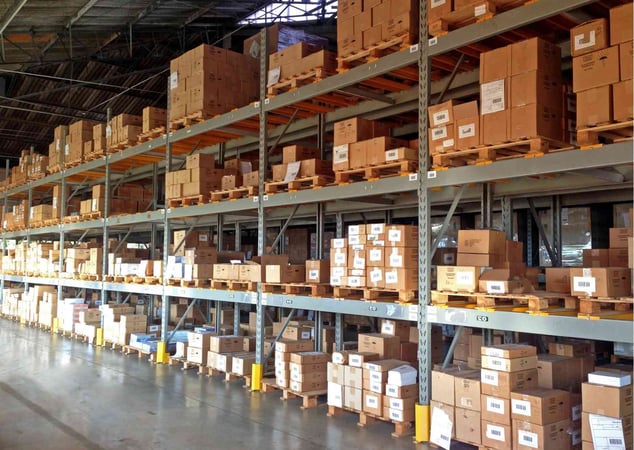
Whether a part is a wing panel bound for a BelugaXL or a pallet built up for a 747-8F, it has to be identified, labelled and checked at every handover: at the supplier's shipping dock, in the cargo terminal and at goods receipt. When the next flight is days away, a wrong label or a missed check costs far more than the few seconds a scan takes.
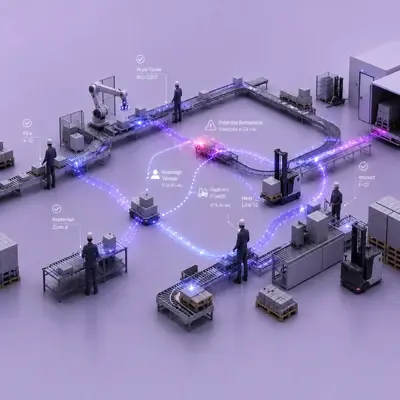
The wearable scanner TIM VEGA-X lets warehouse and cargo staff scan with both hands free while they handle the load. TIM INSPECT uses cameras and vision AI to verify parts, labels and process steps in real time and writes the result to SAP, MES or PLC.
Methodology and sources
Each aircraft is listed under the measure on which it leads. Specifications come from the manufacturers where available: Stratolaunch (Roc); Airbus A380 Facts and Figures and A380 product page; Airbus BelugaXL; Boeing 747-8 airport compatibility data, 787 production and the Dreamlifter and 777-9 certification update (July 2026). Final 747 delivery: Aviation Week. Talon-A flights: Defense News. An-225: Smithsonian Magazine and FreightWaves. An-124 operations: The Aviationist. Antonov's own specification pages could not be accessed while this edition was prepared, so An-124, An-225 and Dreamlifter dimensions are the widely published figures, not checked against a live manufacturer page.