


An ergonomic risk assessment usually happens once a year, when a specialist watches a station for a short time and fills in a form. Vision AI makes it a daily measurement: station cameras derive body posture and joint angles, score lifting, bending and reaching against a risk scale, and a worker's wearable gently reminds them of the right technique when a movement is risky. The Ergonomics & Posture Analysis solution page shows how the scores turn into station-level reports.
This article looks at why posture risk is so hard to manage with periodic observations, how camera-based posture analysis works and what to agree on before you introduce it on the floor.
Why musculoskeletal risk needs more than a yearly check
Musculoskeletal complaints are a major source of lost working days. The European Agency for Safety and Health at Work describes work-related musculoskeletal disorders as one of the most common work-related health problems in Europe, affecting the back, neck, shoulders and limbs, and notes that they usually develop over time through a combination of risk factors.
That last point is the problem. A bent-back lift done hundreds of times a shift does more harm than any single movement, but a short observation cannot count repetitions or see how posture changes as people get tired. On many sites nobody actually measures which station carries the risk; decisions about layout are made on impressions.
Traditional ergonomic assessment methods and their limits
- Observation checklists: an ergonomist or safety specialist watches a task and scores it. The result reflects the few minutes observed, often with the worker aware of being watched.
- Manual handling training: essential, but knowing the right technique and using it on the hundredth lift of the day are two different things. The UK HSE's manual handling guidance puts the emphasis on assessing and reducing the risk, not only on training.
- Complaint and injury records: they show where harm has already happened, not where it is building up.
- Body-worn sensors: useful for studies, but rolling them out to every worker on every shift is rarely practical.
What is missing is continuous, objective data by station and task, collected without disturbing the work.
How camera-based posture analysis works
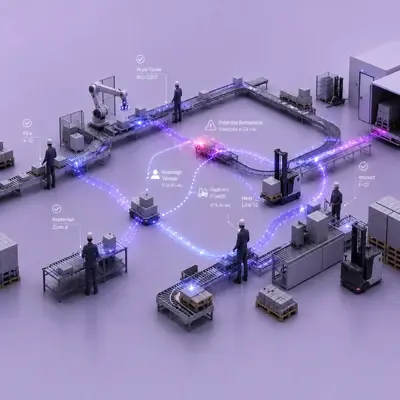
On the TIM INSPECT platform, ergonomics and posture analysis uses fixed cameras at the station and follows four steps:
- Observe the station. Cameras watch lifting, bending and reaching at the station. Posture and movement are assessed, not identity.
- Score the posture. The software derives body posture and joint angles, scores each movement against a risk scale and counts repetitions.
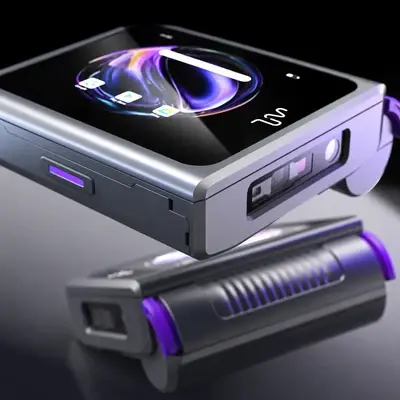
- Remind on a risky movement. When a movement is risky, the worker's AXION wearable vibrates gently and reminds them of the right technique, for example: "Avoid bending at the waist. Bend your knees to lift." The reminder frequency is adjustable to suit the site.
- Report by station. The risk report is built by station and task, not by person, and feeds occupational health reporting and station design.
The movements in scope include lifting with a bent back, working above shoulder level and twisting while lifting. Body posture, joint angles and repetition count are assessed together, which is exactly what a short observation cannot do.
From reminders to better station design
The reminder helps build a habit in the moment, but the bigger value is in the report. When you can see which movement was found risky, at which station, in which task and how often, you can change the station itself: raise a pallet so nobody lifts from the floor, move a frequently used part below shoulder height or turn a workstation to remove a twist. Decisions rest on measurements collected every day rather than on one observation per year. If you are also analysing station cycles, Cycle Time & Microstops uses the same camera view to show where the workflow loses time.
What to agree on before rollout
Involve worker representatives from day one
Ergonomics only works if workers see it as support. The solution is introduced together with worker representatives, and the stations to observe, the reminder frequency and how the report will be used are agreed at the start.
Reports by station, not by person
Individual scores should not be used for performance reviews. Reports are kept by station and task; the aim is to see which station carries the risk and to improve its layout. Stating this in writing before the pilot avoids misunderstandings.
Camera angle at the station
Joint angles can only be assessed if the camera sees the body clearly from a suitable angle. Racking, conveyors or the load itself can hide part of the movement, so camera views are checked station by station and the scope is set accordingly.
Privacy
The system observes posture and movement, not identity. Images are filtered and only the event moment is kept, and privacy is built into the setup in line with GDPR and KVKK.
Reminder frequency
Too many alerts and people stop listening; too few and nothing changes. Start with a moderate setting, review it with the team after the first weeks and adjust. The aim is habit, not punishment.
FAQ
Are posture scores used to evaluate individual workers?
They should not be. Reports are kept by station and task so that the risky station, not the person, is improved.
Which movements does the system assess?
Lifting with a bent back, working above shoulder level and twisting while lifting, together with joint angles and repetition count. The exact scope depends on the camera view at each station.
Will workers get alerts all the time?
No. The reminder frequency is adjustable, and AXION only vibrates gently on a risky movement.
Does the system know who the workers are?
No. It assesses posture and movement, not identity, and keeps only the event moment.
Next step
To choose the stations, movements and camera views for a first pilot, request a demo and we will plan the metrics together; the solution page walks through each step.


