




Camera-based smoke and flame detection gives early fire warning in places where ceiling detectors react late or cannot reach, such as high-bay warehouses, tall racks and open areas. Cameras watch the area continuously, vision AI detects and verifies smoke or flame in the image, and the alert tells the nearest people where the event is. TIM INSPECT Fire & Smoke Early Warning works this way, as an early-warning layer alongside your certified fire detection system, not instead of it.
Why early fire detection is hard in large buildings
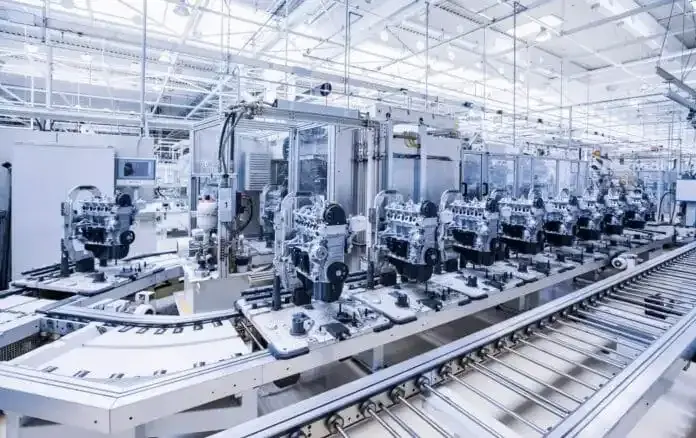
Point smoke detectors on the ceiling work by waiting for smoke to reach them. In a high-ceiling warehouse or production hall, that takes time: smoke has to rise, spread and build up before it triggers anything. Open areas and high racks cannot always be fully covered by detectors, and smoke can be trapped or diverted by racking and airflow on the way up.
There is also a location problem. When the alarm sounds, it is not immediately clear where the fire is. Precious minutes go into finding the source while people evacuate. Fire safety guidance, such as the UK Health and Safety Executive's material on fire and explosion risks at work, stresses detecting a fire early and acting quickly; in a large building, knowing where to act is half of acting quickly.
Traditional fire detection and its limits
- Ceiling point detectors. The certified backbone of fire safety and required in many buildings. In very high spaces they can react later than you would like.
- Beam and aspirating detectors. Good coverage for large volumes, but an alarm still tells you a zone, not what is happening in it.
- Patrols and hot-work permits. Fire watches around welding or grinding help, but they depend on someone being there at the right moment.
- General alarms. A siren tells everyone that something is wrong; it does not tell the nearest trained person where to go.
How vision AI provides early fire and smoke warning
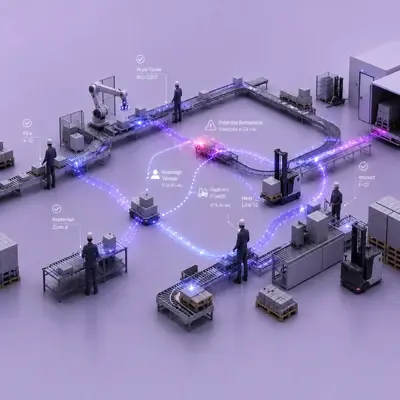
The TIM INSPECT workflow runs in four steps:
- Watch the area continuously. Fixed cameras watch high-bay warehouses, rack aisles and open areas. A thermal camera is added where you also want to watch for abnormal heating.
- Verify the sign with the image. TIM INSPECT detects smoke or flame and verifies it with the image. Flammable material around hot work such as welding or grinding can be watched too.
- Alert the people nearest. The AXION devices of the workers nearest to the event vibrate and announce the location, for example: "Smoke sign. Location: Hall C." The safety officer receives a notification with the event image at the same time.
- Record the event. The event image and location are recorded. Where required, the record is passed to the existing fire panel as additional information.
Picture smoke starting to rise inside a high-ceiling production hall. At that height, it would take time to reach the detectors. The hall camera shows the sign, the system frames and verifies it, the nearest workers hear where it is, and the safety officer sees the image and directs the team, all while the event is still small.
False alarms from steam and dust
Steam and dust can look like smoke in an image, so site-specific tuning is essential. Areas with process steam or dust are taken into account during setup, and signs are verified with the image. Event records also show which steam and dust sources cause false alarms, so the tuning can be adjusted over time.
Where it fits in your fire safety system
This solution does not replace a certified fire detection system. It is positioned alongside it as early warning and can connect to the existing fire panel as additional information. The limits of responsibility are set out clearly in the contract at the start of the project.
What to consider before installation
- Priority areas. Start where detectors struggle most or where the consequences are highest: high-bay storage, rack aisles, open yards and hot-work areas.
- Camera choice and position. Fixed cameras cover most scenarios; a thermal camera is added only where abnormal heating needs to be watched. Which camera goes where is decided per site.
- Process conditions. List areas with steam, dust or exhaust so the tuning accounts for them from day one.
- Alert routing. Decide who counts as "nearest" in each area, who the safety officer is per shift, and how the alert fits your emergency procedure.
- Privacy. The system monitors areas and events, not who people are. Images are filtered and only the event moment is stored, in line with KVKK and the GDPR.
Early warning only helps if people can get out, so pair it with Emergency Exit & Route Monitoring, which flags blocked exits and routes. Both run on the TIM INSPECT platform. The full workflow is on the fire and smoke early warning page.
FAQ
Does this replace a fire detection system?
No. It works alongside a certified system as early warning and can pass information to the existing fire panel.
Can steam or dust cause false alarms?
They can, which is why setup includes site-specific tuning and every sign is verified with the image.
Is a thermal camera required?
No. The scenario works with fixed cameras; a thermal camera is added only where abnormal heating needs watching.
Who receives the alert?
The nearest workers' AXION devices announce the location, and the safety officer receives the event image.
Are people being monitored?
No. Areas and events are monitored, not identities, and only the event moment is stored.
Next step
If you want to see where cameras could add early warning in your buildings, request a demo and we can review your high-bay areas and existing detection together.


