

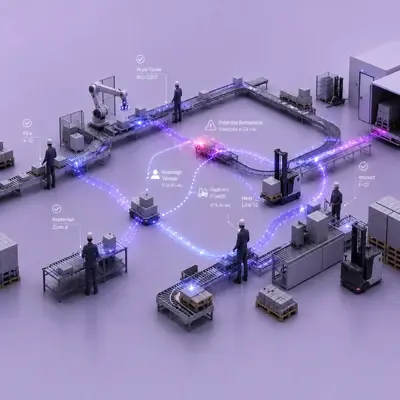

Error-proofing an assembly line means making it impossible, or at least very unlikely, for the wrong or a defective part to be fitted to a vehicle. With vision AI on a smart glove, the operator scans the part's barcode and takes a photo while holding it; TIM INSPECT checks that it is the right part for that vehicle and free of scratches, then sends the result to MES and a stop or OK signal to the station PLC.
This guide covers why wrong-part errors survive on fast lines, where classic poka-yoke methods stop, and how assembly part verification with TIM INSPECT builds the check into the motion of holding the part. We close with the points to plan before a pilot at your stations.
Why wrong or defective parts still reach the vehicle
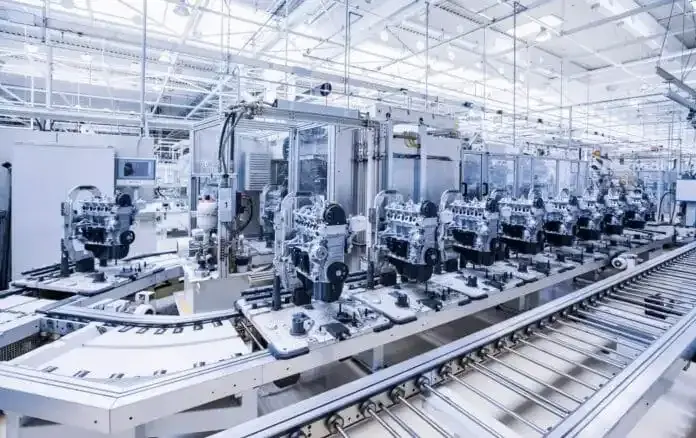
Modern vehicle lines build many variants on the same line. Two parts can look almost identical yet belong to different trims, markets or engine types. On top of that, the line does not wait: in the deployment described on the solution page, a vehicle leaves the line every 52 seconds. The operator picks up the part and fits it straight away.
In that time window, two different questions need an answer. Is this the right part for this vehicle? And is this particular part free of defects such as scratches or damage? If either answer is wrong, the cost grows with every station the vehicle passes: rework, a quality hold at the end of the line or, in the worst case, a field issue. And without a record of which part went into which vehicle, tracing the problem back is slow.
Traditional error-proofing and its limits
- Barcode scanning with a handheld scanner: verifies identity if the barcode is readable, but says nothing about the part's condition, and a damaged barcode stops the check.
- Pick-to-light and sequenced bins: guide the operator to the right bin, but cannot confirm that the part taken is the right one or that it is undamaged.
- Fixed camera at the station: works when the part is presented to it. On a fast line, carrying every part to a camera means an extra walk and extra time on every vehicle.
- Visual check by the operator: depends on attention, and surface defects are easy to miss under time pressure.
The common thread: each method checks one thing, or checks it in a place the part does not naturally pass. The aim is to check identity and quality at the moment the part is already in the operator's hand.
How vision AI verifies parts at line speed
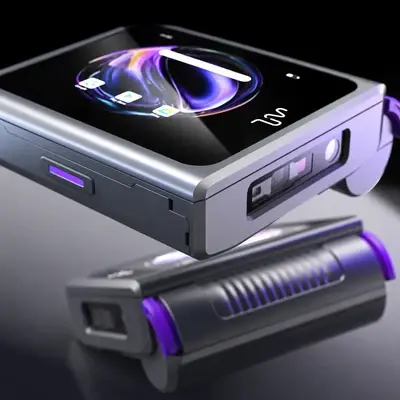
In the deployment on the solution page, the operator wears the VEGA-X smart glove and TIM INSPECT makes the decision. The flow has four steps.
1. Scan the barcode
The operator picks up the part and scans its barcode with VEGA-X. If the barcode is damaged, TIM INSPECT reads the number on the part character by character with OCR, and where needed recognises the part by its shape. The work does not stop because of an unreadable label.
2. Verify with a photo
The glove takes a photo of the part. From that single photo TIM INSPECT checks two things: that the part belongs to that vehicle, and that it has no scratches or defects. The operator stays at the station.
3. Stop when it is not OK
If the part is wrong or defective, the glove vibrates and a red light comes on. At the same moment a stop signal goes to the PLC at the station, so the line does not move on with a faulty part. The operator takes another part and scans again.
4. Write the record to MES
When the part is OK, the approval and the photo are written to MES and an OK signal goes to the PLC. The part becomes traceable together with the vehicle it went into, and the record shows whether identity was confirmed by barcode or by OCR.
This deployment went live on the ABS unit. The solution page reports zero errors, 100% part traceability and an operation time of 4 seconds, down from 8, based on the Thread In Motion project report.
What to plan for before a pilot
Pick the right first part
Start with a part where a wrong fit is costly and variants are easy to confuse. The method can be carried over to other automotive parts once the first station runs well.
Define the defects you care about
The surface check looks for scratches and defects in the photo. Collect sample images of acceptable and unacceptable parts early, including borderline cases, so everyone agrees on what "not OK" means.
Lighting at the station
Because the photo is taken in the operator's hand, angle and light vary more than at a fixed camera. Check the station's lighting and make sure reflections on shiny parts do not hide the surface you want to inspect.
MES and PLC integration
Agree which MES record receives the approval and photo, and how the line responds to the stop and OK signals. The response logic on the PLC side is planned together with your automation team for each line.
Look at the whole station
The right part is only half of a correct assembly. If you also need to confirm that steps are done in order, assembly sequence verification follows the manual steps with a station camera.
FAQ
What is assembly part verification?
It is a check that the part being fitted is the right one for the vehicle and is free of surface defects. With TIM INSPECT it uses the VEGA-X barcode scan and photo, alerts the operator and signals the PLC.
Why not carry the part to a fixed camera?
It would add an extra movement, an extra walk and lost time on every vehicle. With VEGA-X the check happens within the motion of holding the part, so the operator never leaves the job.
What happens if the barcode cannot be read?
TIM INSPECT reads the number on the part from the photo with OCR and compares it with the part the vehicle expects. Where needed, the part can also be recognised by its shape.
Which parts can it be used for?
The deployment went live on the ABS unit, and the same method can be applied to other automotive parts. Scope is assessed with the parts you want to verify and your line speed.
Next step
To look at your parts, MES and PLC connections and line speed together, request a demo and go through the assembly part verification flow with our team.


