





Visible emissions monitoring by camera means comparing what your own cameras see at stacks, open yards and waste points with a defined normal state, and alerting the person responsible as soon as something deviates: smoke that turns darker or denser, a dust cloud drifting off site, or waste going into the wrong bin. It does not replace statutory emission measurement, but it lets you learn about unusual smoke or dust from your own camera before a complaint arrives from outside.
Visible emissions and waste management are among the topics questioned most often in environmental audits. Yet in many plants the first sign of a problem is a phone call from a neighbour or a photo on social media. By then the event is over, and the site has little record of how long it lasted or what triggered it. This guide explains the gap and how the Environmental Monitoring scenario on TIM INSPECT turns existing camera views into early warning and audit-ready records.
Why visible emissions and waste sorting are hard to control
- Smoke changes quickly. A stack can run normally for hours and then produce darker or denser smoke for a short period. Unless someone is looking at that moment, nobody inside the site notices.
- Dust travels. Dust from open yards, vehicle areas and stockpiles drifts beyond the fence line, where it becomes a neighbour's problem first.
- Waste sorting fails at the source. The wrong material in a waste bin disrupts recycling, and the mistake is usually found much later, if at all.
- Little evidence for audits. Without images and durations, it is hard to show auditors what happened, how long it lasted and what was done.
Traditional methods and their limits
Statutory emission measurement
Regulated measurements, such as stack testing and continuous emission monitoring where required, are the legal basis for emission compliance. Visual opacity assessment also has formal methods; in the US, for example, EPA Method 9 describes how trained observers determine the opacity of visible emissions. These methods are essential, but they are periodic or point-specific and are not designed to tell a line supervisor that something looks wrong right now.
Walk-arounds and visual checks
Environment officers regularly look at stacks and waste points, but a check every few hours misses short events between rounds.
Complaints
Complaints are the least desirable early warning system: they arrive late, without detail, and damage relations with neighbours and authorities.
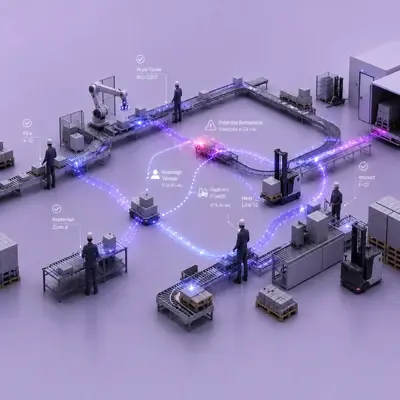
How camera-based visible emissions monitoring works
On the TIM INSPECT platform, the workflow has four steps:
- Define the normal state. The usual appearance is set for each stack and open area: smoke colour and density, and the type of each waste bin.
- Monitor and spot deviations. Fixed cameras continuously watch smoke colour and density, dust clouds and waste bins, and detect deviations from the definition.
- Alert the person concerned. The environment officer and the line supervisor concerned are alerted on AXION with the image. A worker who uses the wrong bin is alerted at that moment.
- Record the event and its duration. The event image and duration are recorded, and the records feed into environmental management reports.
Three typical situations
| Situation | Who is alerted, and how | What is recorded |
|---|---|---|
| Dark stack smoke | Smoke from a stack turns darker and its density moves outside the defined normal state. The environment officer and line supervisor receive a notification with the image and assess it at the source. | The event image and duration. The image serves early warning and internal audits, not statutory measurement. |
| Dust cloud over the site | A dust and smoke cloud forms in an open area and spreads towards the site boundary. The environment officer and the area owner are alerted with the image. | The image of the spread and how long it lasted. |
| Wrong waste bin | A worker puts plastic waste into the paper bin. Their AXION alerts at that moment and names the right bin. | Wrong sorting is recorded per waste point and appears in environmental management reports. |
Spilled or overflowing waste at waste points is within the scope as well.
What to consider before setup
Camera position and weather
Weather conditions such as fog and rain affect the assessment of smoke. Camera position and the definition of normal are set for the site during setup, and these limits are addressed within the pilot scope.
Defining "normal" carefully
Each stack and area has its own usual appearance, which can vary with process state. Agree on the definition with the environment team so alerts are meaningful rather than constant.
Privacy at waste points
Wherever people appear in view, privacy is designed in from the start. Zones and behaviour are monitored, not identity; images are filtered and only the event moment is stored, in line with GDPR and KVKK requirements.
Reporting
Event records feed into environmental management reports. Seeing recurring events by location helps you prepare for audits with your own records.
Camera-based smoke monitoring at stacks is different from fire detection inside buildings. For flames, smoke and unusual heating indoors, see the related Fire & Smoke Early Warning scenario.
FAQ
Do camera images replace statutory emission measurement?
No. Camera images do not replace statutory emission measurement. They are used for early warning and internal audits.
What can cameras monitor for environmental compliance?
The colour and density of stack smoke, dust clouds in open areas, the type of material put into a waste bin, and spilled or overflowing waste.
Does weather affect the assessment?
Yes. Fog and rain affect the assessment of smoke; camera position and the normal-state definition are set for the site during setup.
Who receives the alert?
The environment officer and the line supervisor concerned, on AXION with the image. For a wrong waste bin, the worker concerned is alerted at that moment.
Next step
To define the normal state for your stacks and waste points, explore the Environmental Monitoring scenario or request a demo with our team.


