


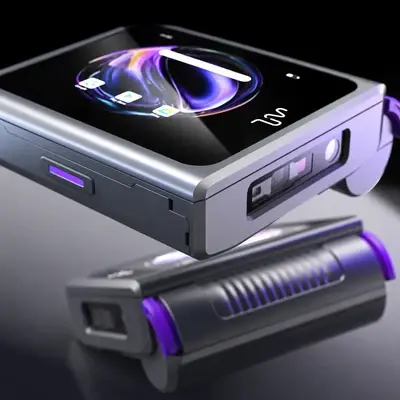

Vehicle label verification means confirming that every label on a finished vehicle carries the right values for that specific vehicle, not just that a label is present. The most reliable way to do it at line speed is to read each label's text with OCR and compare it field by field with the vehicle's MES record, holding the vehicle the moment a value does not match. That is the approach behind TIM INSPECT Vehicle Label Verification, which puts the camera on the operator's hand instead of on a fixed stand.
Why vehicle label errors are so costly
A finished vehicle carries a set of labels that belong to it and to no other vehicle: the chassis number on the windshield, the weight label on the door pillar, the towing label in the trunk, the tyre pressure label inside the driver's door and the refrigerant label under the hood. The values on those labels change with the variant, the engine, the equipment and the target market. Two cars that look identical on the line can need different labels.
That is what makes the error hard to see. A label taken from the vehicle in front looks perfectly correct; only one number on it is wrong. Many of these labels are regulated. In the United States, for example, manufacturers must attach a certification label under 49 CFR Part 567, and other markets have their own type-approval rules. A wrong label on the wrong vehicle is therefore both a legal issue and a quality issue, and once the vehicle has left the plant, fixing it means tracing, recalling and reworking.
Traditional ways of checking labels, and where they fall short
- Visual checks against a sheet. An operator compares each label with the build sheet. It works at low volume, but at line speed nobody can reliably read five sets of numbers per vehicle against a record, shift after shift.
- Barcode scanning. A scan confirms that a label exists and identifies it, but it does not check the printed values a customer or inspector actually reads. Some labels carry no barcode at all.
- Fixed cameras. A fixed camera sees one area well. Vehicle labels sit at five different points, and some are visible only when a door, the trunk or the hood is open. No single fixed setup sees them all.
The common gap is the comparison. Seeing a label is not enough; each field has to be checked against what this particular vehicle should carry.
How vision AI handles vehicle label verification
With TIM INSPECT, the check runs in four steps on AXION, the wearable computer on the operator's hand:
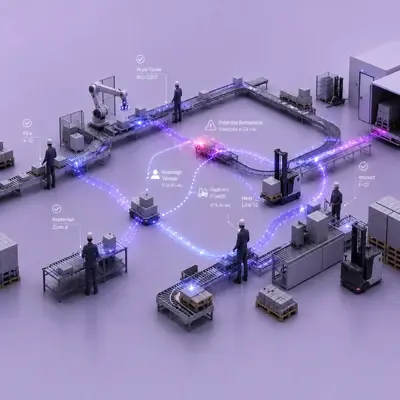
- Get the vehicle from the system. The production system sends the next vehicle's chassis number to AXION. Once the number on the windshield has been read and verified, the expected label values are fetched from MES.
- Scan the labels in turn. The operator presents the five labels one by one. For each label, three stages run: the label is detected, its characters are read with OCR, and every field is compared with the MES value. AXION announces each step by voice.
- Stop on a mismatch. Each step returns OK or NOT OK. If a value does not match, the line stops, everyone involved is notified and the vehicle does not move on to the next station.
- Record with evidence. Every check is stored with a marked and a raw photo, and the result is written back to MES, so the history of any vehicle can be reviewed later.
Typical cases the check catches are a weight label that belongs to another vehicle (the chassis number on it differs), a missing towing label, or a tyre pressure value that does not match the record. In each case the operator hears what is wrong, the correct label is applied and scanned again, and only then does the vehicle continue.
Why the camera is on the hand
Because AXION is worn on the operator's hand, it sees each label up close and at the right angle, including the ones behind a door or under the hood. The image is analysed on the device, so reading does not wait for a round trip to a server, and the operator carries nothing else. If the connection drops, the device keeps working offline and uploads its records when the connection returns.
What a deployment has delivered
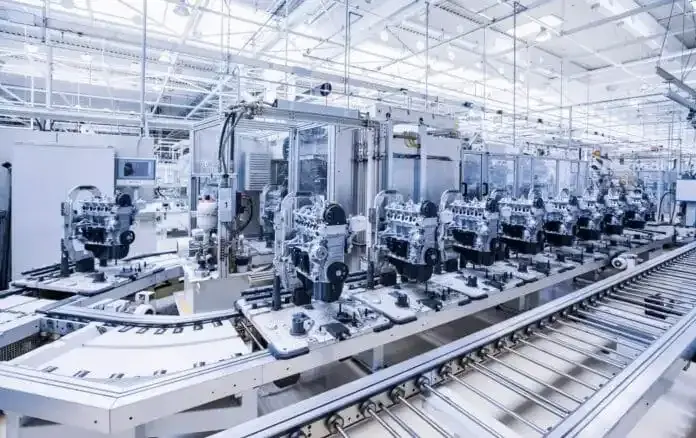
On an automotive manufacturer's production line, the vehicle label check has run more than 1.5 million operations with 100% accuracy. All five label checks together take 6 seconds, including system communication and image processing. These figures come from the Thread In Motion project report for that deployment.
What to plan before rolling out label verification
- Label inventory. List every label, where it sits on the vehicle and which fields must be read. This defines the order in which the operator presents them.
- MES data and integration. Each field needs an expected value per vehicle in MES, and the result has to be written back. Agree on this two-way link early, because it drives the whole check.
- Stop and release logic. Decide who is notified when the line stops and how a vehicle is released once the correct label has been rescanned.
- Light and surfaces. Windshield, door pillar and engine bay labels sit under very different light, often on reflective surfaces. Sample images from your own line are the best way to confirm the scope.
- Evidence and review. Decide how records will be used: the management panel shows label type, fields read, match status and the evidence photo, with filters by device and photo type.
If your labels are on parts rather than on the finished vehicle, the same idea applies further upstream; see Metal Part & Label Verification. Vehicle label checks are one of 35 applications on the TIM INSPECT platform, which share the same image processing, alerting and record-keeping.
FAQ
Is vehicle label verification the same as barcode scanning?
No. The text and values printed on the label are read with OCR and compared with the expected value for that vehicle. Each label goes through detection, character reading and comparison with the MES record.
Which labels can be checked?
In the deployment described above, five labels are checked on every vehicle: chassis number, weight, towing, tyre pressure and refrigerant. The list for your line is defined during the pilot.
What happens when a value does not match?
The line stops and everyone involved is notified. The vehicle stays at the station, the photo and the value read stay on record, and the vehicle continues once the correct label is scanned.
Why not use fixed cameras?
The labels sit at five different points and some are hidden until a door or the hood is opened. A camera on the operator's hand reaches all of them at the right angle.
Are records lost if the network drops?
No. The device can work offline and uploads its records when the connection returns.
Next step
If you want to see how this would work with your own labels and MES, you can request a demo and we will look at a pilot scope for your line together.


