



A quick connector that is not fully seated often looks connected from the outside, which is why it slips past visual checks. The reliable way to verify it is to capture an image right after the connection is made and let vision AI check whether the connector body has reached its stop and engaged with its counterpart. With a smart glove, that image is taken by the same hand that made the connection, and an OK or NOK result reaches the line and the PLC.
In this guide we look at why half-seated quick connectors are a persistent assembly risk, why the classic checks are hard to enforce, and how quick-connect verification with TIM INSPECT turns every connection into a recorded, image-based decision without slowing the operator down.
Why half-seated quick connectors are a problem
Quick connectors join hoses and pipes in fuel, cooling, brake, air and other fluid lines. The operator pushes the connector on, it seats and locks. If it is not pushed all the way, it still sits on the pipe and looks in place, but it is not locked. Under pressure, vibration or temperature change, a connection like this can work loose later.
The gap between a locked and an unlocked connector is small and hard to see by eye. The connections themselves are often under the vehicle or inside the engine bay, in tight spots with a restricted view. And the line keeps moving. A missed connector found at end-of-line testing means rework in an awkward place; one found in the field is far more expensive.
Traditional checks and their limits
- Listening for the click: useful, but easy to miss in a noisy plant, and not every connector gives a clear sound.
- Pull-back test: the operator tugs the connector to confirm it is locked. It works when done, but it depends on discipline on every vehicle and leaves no record.
- Visual check: hard in tight, poorly lit spots where the difference is a few millimetres.
- Fixed camera: the view to connectors under the vehicle or in the engine bay is blocked differently from one vehicle to the next, so a fixed angle rarely sees the connection clearly.
- Leak or pressure tests: valuable at end of line, but they find the problem after the vehicle has left the station where it is easiest to fix.
What is missing is a check that happens where the connection is made, at the angle the operator already has, and that leaves evidence for every vehicle.
How vision AI verifies quick connector seating
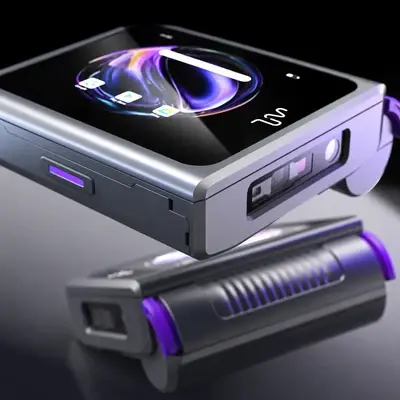
In the automotive deployment described on the solution page, operators wear the VEGA-X smart glove and TIM INSPECT runs the analysis on a server. The flow has four steps.
1. Connect and capture
The operator pushes the quick connector on and captures it with VEGA-X. The glove reaches the right angle together with the hand that makes the connection, so no extra movement is needed.
2. Assess the seating
The image goes to the server. TIM INSPECT first finds the connector in the image, then checks whether it has fully engaged with its counterpart. In a correct assembly the connector body reaches the stop on the pipe and the lock ring sits in place; in a faulty one a gap remains. The decision is OK or NOK, picked out even when the connector sits among other hoses and cables.
3. Alert on NOK
If the connector is not fully seated, the glove vibrates. The signal goes to the PLC and the line stops. The operator fixes the connection, checks again and the line moves on, so the vehicle does not reach the next station with a half-locked connector.
4. Record each connection by vehicle
The image and result of each connection, for example the lower and upper connections, are stored against the vehicle. The result also appears on the smart screen on the line. A NOK, the correction and the repeat check sit in the same vehicle record.
The solution page reports 100% traceability, a process time of 4 seconds instead of 8 and 100% customer satisfaction for this deployment, based on the Thread In Motion project report. The same method was applied to the connections of two different engine types.
What to plan for before a pilot
Start with your own OK and NOK images
Feasibility is best assessed with sample images from your line: correctly seated connectors and deliberately half-seated ones, at the angles operators actually see. This shows quickly whether the gap is visible in the image.
List connections by engine type
Connector positions depend on the engine type. Map which connections are checked on which variant and in what order, so each result is tied to the right point on the right vehicle.
Plan the PLC response
In this deployment a NOK stops the line. How the line responds, and when it may continue, is planned together with your automation team for each line during setup.
Lighting in tight spots
Engine bays and underbody areas are often dark. Check whether existing lighting is enough for a clear image at the moment of capture, and adjust where needed.
Look at the whole station
Connections are one part of a correct assembly. If the station also fits parts that must be the right variant and free of defects, assembly part verification uses the same glove to check identity and surface quality.
FAQ
What is quick-connect verification?
It is an image-based check that hose and pipe quick connectors are fully seated. With TIM INSPECT, the operator captures the connection with VEGA-X, the result is OK or NOK, and a NOK stops the line through the PLC.
What exactly does the system look at?
It finds the connector, then checks whether the connector body has reached the stop on the pipe and the lock ring sits in place. A remaining gap means NOK.
Why a glove rather than a fixed camera?
The connections are under the vehicle and in the engine bay, where a fixed camera's view is blocked differently on each vehicle. The hand that makes the connection already brings VEGA-X to the right angle.
Does the check slow the line down?
No. It follows straight on from the connecting motion and the operator does not walk to a separate station. In this deployment, process time went from 8 seconds to 4.
Next step
To assess feasibility with your own sample images and plan line integration, request a demo and go through the quick-connect verification flow with our team.


